Hospitality furniture procurement · Updated 27 July 2026
Hotel Nightstand Power Module RFQ Checklist for Guest Use and Maintenance
Direct answer: A hotel nightstand power module RFQ should describe the guest interaction, furniture construction, destination, cleaning routine and maintenance-access plan before it asks for a price. Provide the nightstand drawing, intended interface layout, cable route, plug and destination questions, room quantity, sample requirement and replacement strategy. Approve the product only after a representative sample is reviewed in the actual furniture assembly.
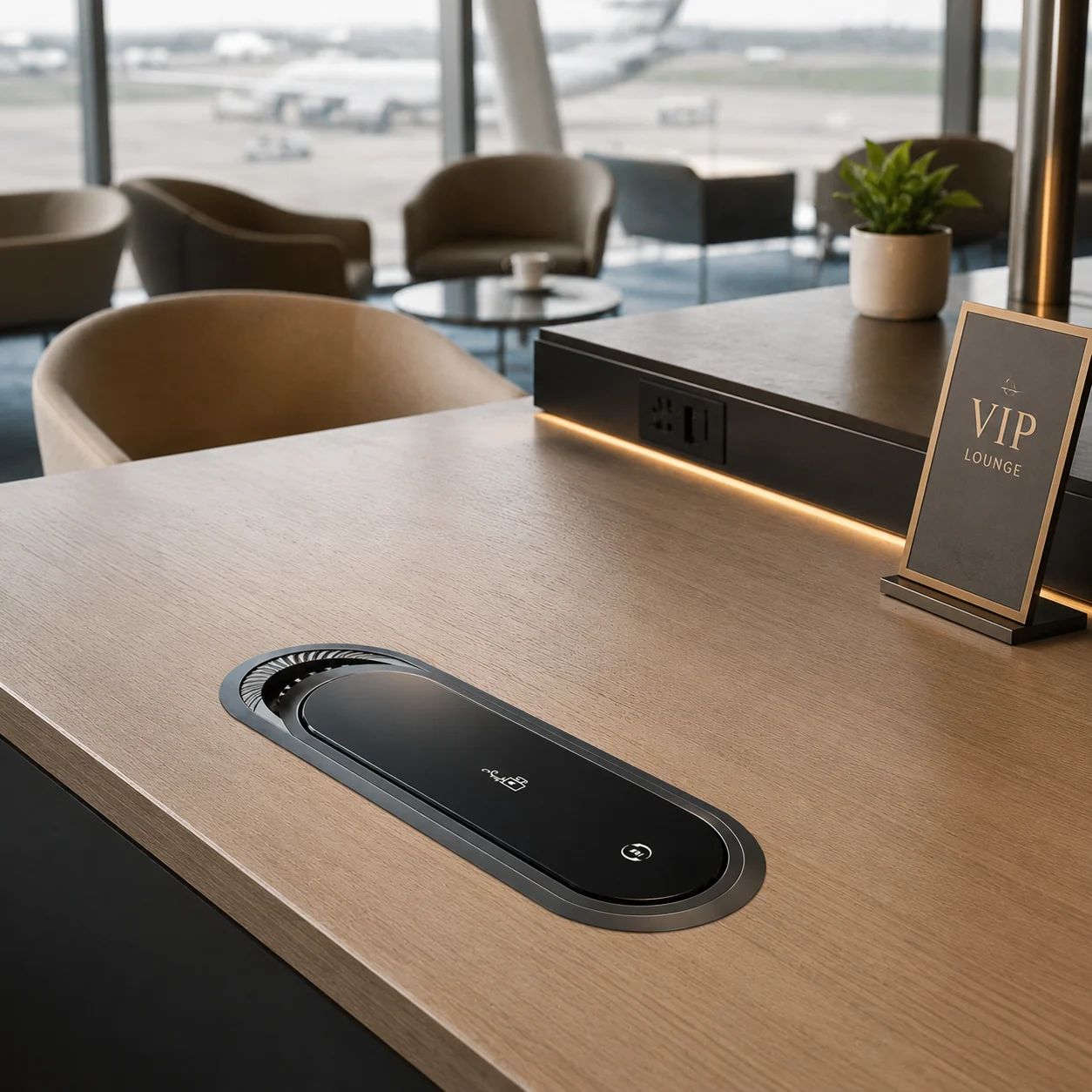
Begin with the guest task, not a generic socket count
The power module sits inside a wider guest experience. A useful brief explains what the guest should be able to do from the bed or seating position, what must remain visible, and what should not be activated accidentally during cleaning or normal use. This does not require the buyer to invent technical specifications. It requires the buyer to define the task and the furniture context clearly.
Guest access
State whether the module is intended for a phone, laptop, bedside device or another defined use. Mark the expected reach zone and viewing direction.
Furniture integration
Show the top, side, drawer, rear panel, wall clearance and the route available below or behind the nightstand.
Housekeeping interaction
Record surfaces that need cleaning, openings that could collect debris and parts that must remain accessible without damaging furniture.
Maintenance access
Define how staff can identify, remove or replace a module and reach the cable or connection point.
Hotel nightstand RFQ input table
| Input group | Buyer should provide | Supplier should confirm |
|---|---|---|
| Application | Room type, furniture position and intended guest tasks | Whether a current product format can be reviewed for that application |
| Furniture | Dimensioned nightstand drawing, material, thickness, opening or mounting area and obstructions | Proposed installation method and model-specific furniture inputs |
| Visible layout | Preferred interface sequence, orientation, finish and any cover or light requirement | Available or proposed configuration, with unconfirmed items marked clearly |
| Destination | Country or market, requested plug and cable, label language and document questions | Model-specific configuration and document availability in writing |
| Operations | Cleaning method, service access, replacement plan and spare requirement | Removable parts, access method and proposed packaging or identification |
| Commercial | Sample quantity, room quantity, rollout stages, packaging and requested delivery window | Sample, MOQ, lead time, price, warranty and other terms in the written quotation |
Control furniture fit before the room rollout
Nightstand construction differs by design. A similar-looking top can hide a drawer, frame, cable channel or wall-fixing area. Provide a section view, not only a top view. Mark the opening or mounting edge, underside envelope, cable route, rear clearance and any part that maintenance staff must reach.
- Identify the left or right side of the bed and the user-facing orientation.
- Show drawer movement, internal partitions and rear-panel clearance.
- Record where the cable enters the furniture and where it continues.
- Mark surfaces that should not be scratched or compressed by the mounting system.
- Define how the module can be removed without dismantling unrelated furniture.
- Keep all unconfirmed cutout and clearance dimensions visibly provisional.
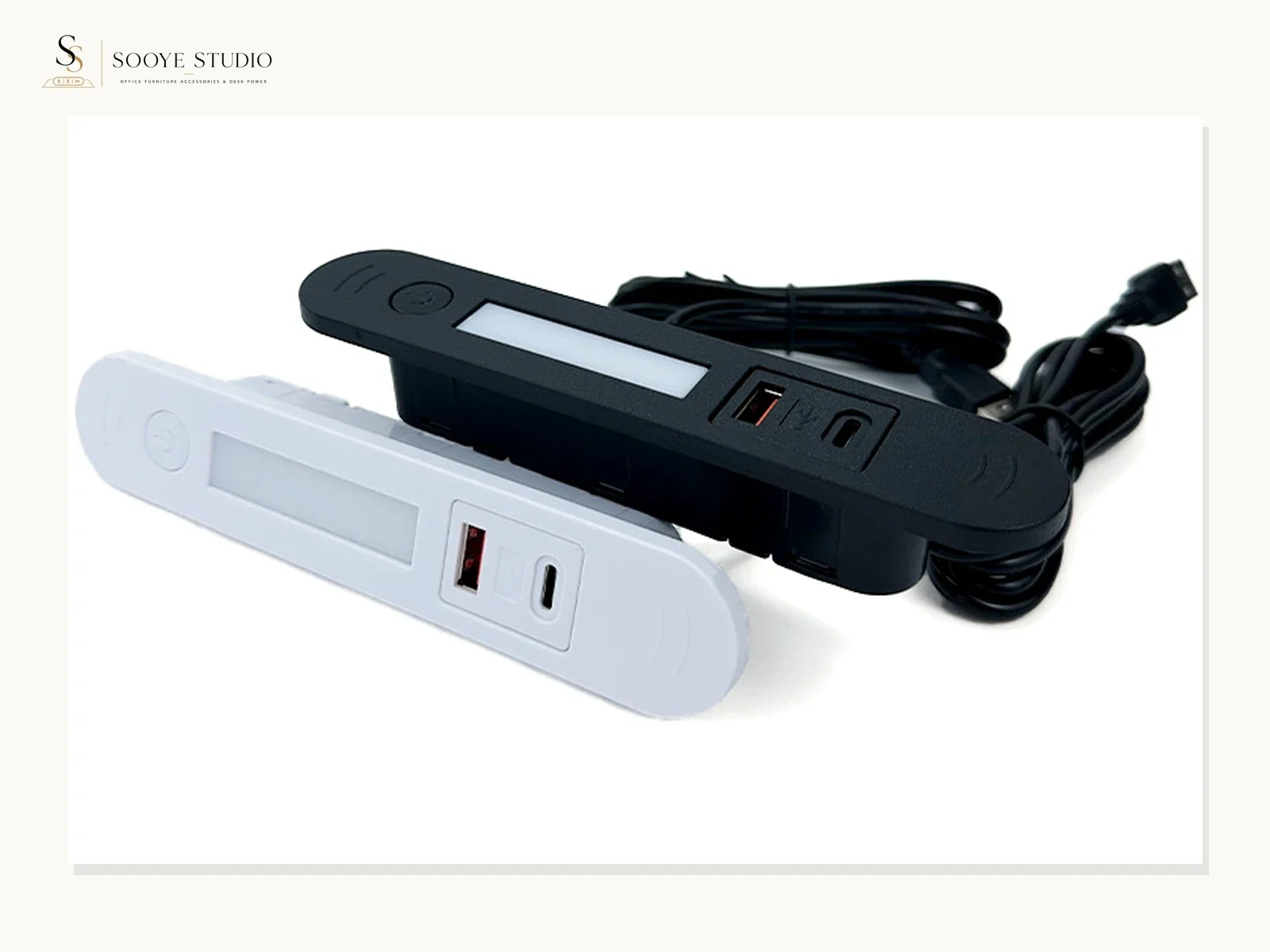
Make destination questions explicit
Do not use “international” as a substitute for a destination brief. Name the country or market and ask for the exact plug, cable, input configuration, visible labels and document scope required for review. If the hotel group has its own specification or consultant schedule, include the relevant controlled document.
Sooye Studio does not treat an interface image, supplier listing or similar model as proof of certification. Certification and test-document questions must be checked against original model references and the intended destination. If no formal mapping exists between a certificate’s original model and a Sooye Studio DP model, the certificate must not be presented as covering that DP model.
Plan cleaning and service without inventing performance claims
Housekeeping and maintenance teams can provide valuable input without being asked to approve electrical design. Ask them to review visible gaps, liquid and debris exposure points, cleaning access, removable covers, identification labels and the ability to reach the module or cable. The supplier should answer product-construction questions for the exact model; performance and compliance questions require their proper evidence paths.
| Operational checkpoint | Representative sample observation | Decision record |
|---|---|---|
| Guest reach and visibility | Access from the intended bed or seat position | Accept / reposition / revise orientation |
| Accidental contact | Relationship to bedding, personal items and cleaning tools | Accept / add control / revise location |
| Surface cleaning | Access around visible edges and interfaces | Accept / request cleaning guidance / revise |
| Furniture access | Ability to reach fasteners, cable and module body | Accept / revise furniture / revise product path |
| Replacement | Removal steps and identification of the approved reference | Accept / document / create spare plan |
Use a representative paid sample, not a showroom assumption
Paid samples are available for current Sooye Studio formal models, and sample freight is paid by the buyer. The hotel or furniture team should test the sample in a representative nightstand, with the intended orientation and service conditions. Record the model or project reference, configuration, drawing revision, furniture used, installation result and open items.
A sample result is specific to the reviewed assembly. It should not be turned into a statement that the product fits every nightstand, hotel brand or destination. If the product or furniture changes, the approval record should say whether a new sample review is required.
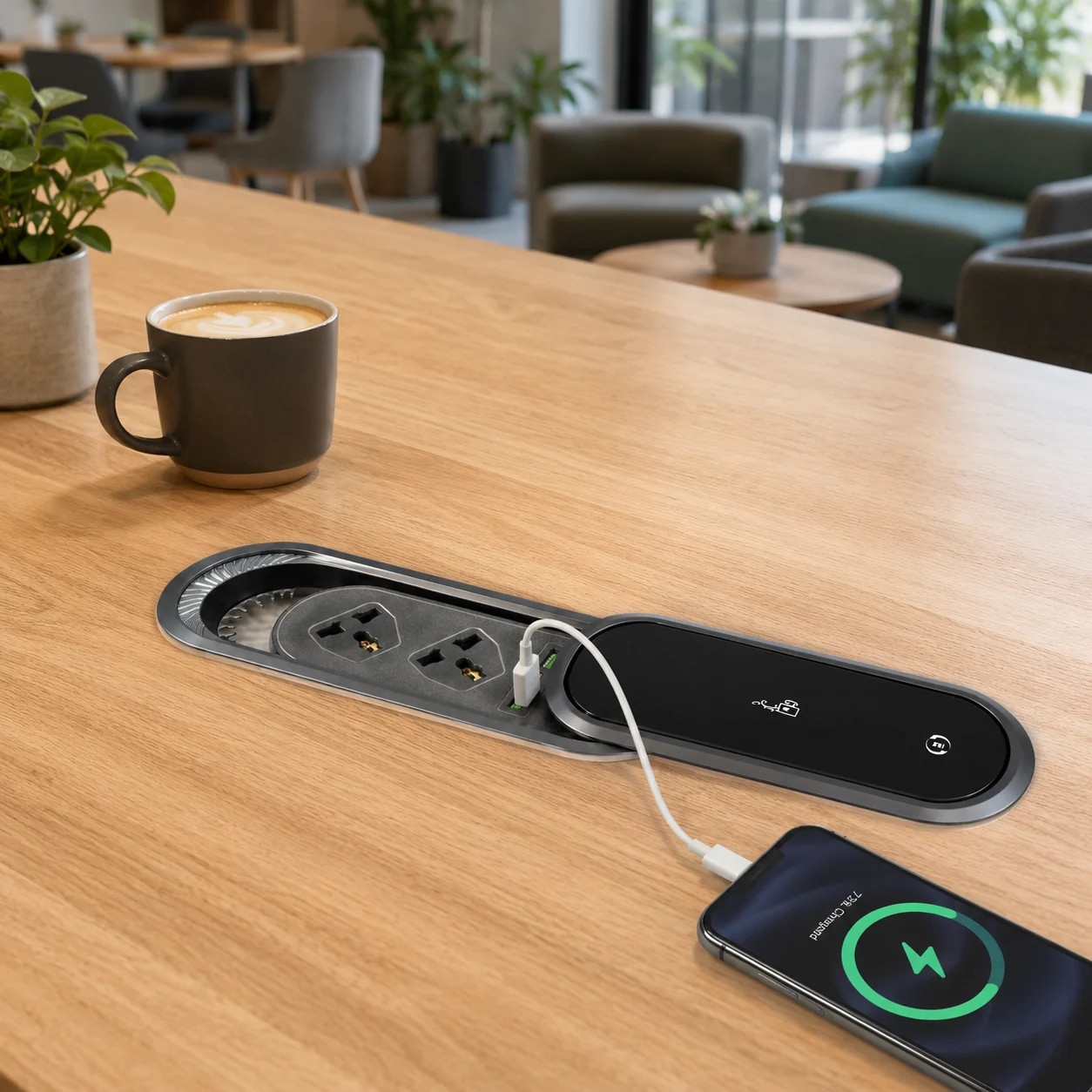
Build a maintenance and spare-parts question set
- How will the approved product and configuration be identified after installation?
- Which visible and concealed parts can be inspected without removing the furniture?
- What tools and access are required to remove the module?
- Does replacement require a matching model, configuration, finish, cable or plug?
- How should spare quantity and packaging be defined for the project?
- Which order and drawing records must be retained for later replacement?
- Which warranty terms apply to the exact order?
Sooye Studio’s general confirmed warranty position is one year after shipment. A longer period may be discussed for larger quantities, but the applicable duration, scope, exclusions and remedy must be stated in the written quotation or order terms. Do not rely on a general webpage sentence as the complete warranty agreement.
Commercial questions to close after the configuration is clear
MOQ differs across product categories and configurations. There is no single public MOQ for every desk power and furniture accessory product. Production lead time is not published as a fixed number. Ask Sooye Studio to confirm the selected model, configuration, sample, quantity, packaging, requested delivery window and destination in writing before commercial commitment.
OEM, ODM, private label and moulding may be discussed when order quantity is sufficient. List requests for logo, packaging, colour, ports, plug, cable and structure separately so feasibility and cost can be reviewed without implying that every change is available for every model.
Copy this hotel nightstand power RFQ structure
- Project scope: room type, nightstand position, number of rooms and rollout stages.
- Guest task: intended device or use, reach zone, visibility and orientation.
- Furniture: dimensioned drawings, materials, openings, drawers, rear and underside clearances.
- Product: current model or provisional format, visible layout, finish and mounting preference.
- Destination: country, requested plug and cable, label and document questions.
- Operations: cleaning, service access, product identification and spare plan.
- Sample: required quantity, representative assembly and acceptance checkpoints.
- Order: estimated quantity, packaging, requested delivery window and written commercial confirmation.
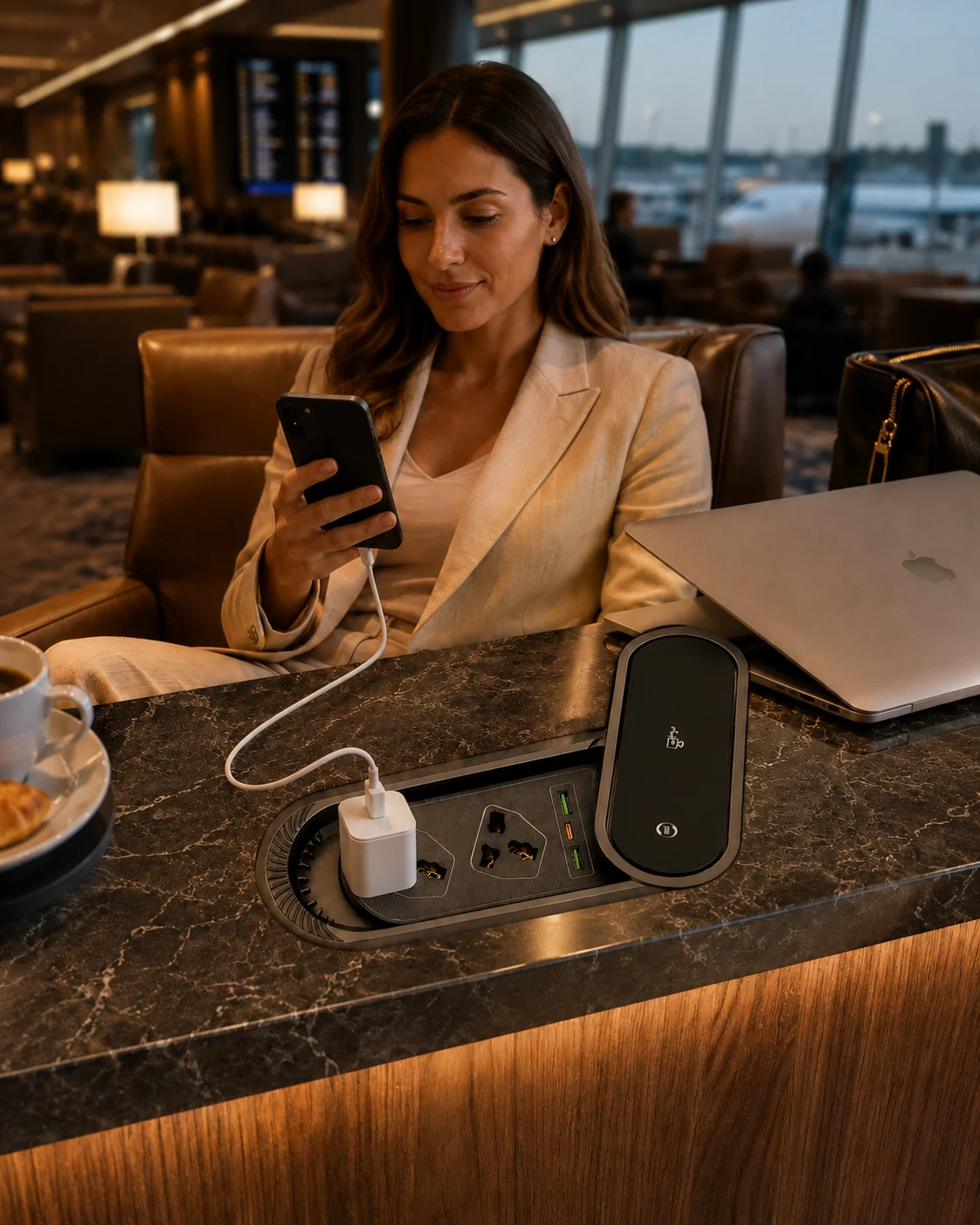
Hotel desk accessory set checklist
Hotel desk power procurement
Sample testing checklist
Prepare a hospitality RFQ
Send the real furniture drawing, destination, intended guest task, preferred configuration, sample quantity and maintenance questions. Sooye Studio will review the current product path and identify which items can be confirmed now and which require order-specific written confirmation.
Editorial basis: a proof-safe hospitality sourcing workflow. No hotel customer case, certification coverage, universal fit or fixed commercial term is claimed.