Paid sample preparation · Updated 29 July 2026
Desk Power Module Model Shortlist Record Before Ordering Paid Samples
Direct answer: Before ordering paid samples, reduce the catalogue to a documented shortlist of models that match the furniture format, destination, visible interface needs and service-access plan. For each candidate, record why it remains, what evidence is confirmed, what still needs verification and what the sample must prove. This prevents a buyer from paying to ship attractive but unsuitable samples and gives the supplier a precise written basis for configuration review.
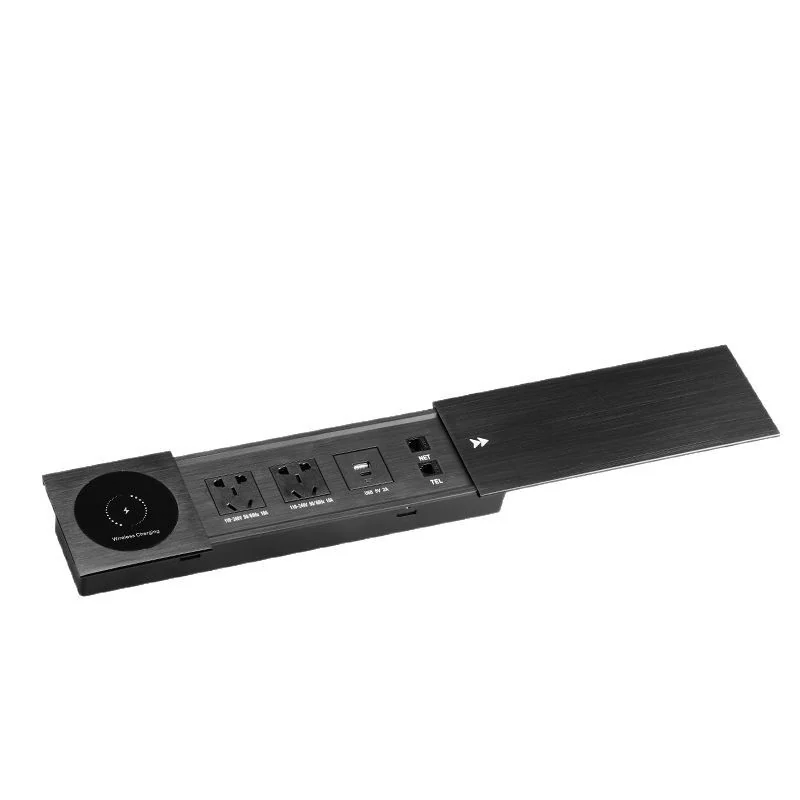
Why a shortlist should exist before a sample request
A catalogue is designed for discovery. A sample order is a controlled verification step. If a buyer moves directly from browsing to “send samples,” the request often omits the furniture drawing, destination, required interfaces, finish, cable, plug and approval criteria. The result can be several samples that are difficult to compare and impossible to approve consistently.
A useful shortlist changes the question from “Which product looks good?” to “Which model deserves a paid verification step for this project?” It also makes rejected candidates visible. That matters because the team should not reintroduce a rejected format later without addressing the reason it was removed.
Create one project requirement line first
| Requirement field | What the buyer records | Why it controls the shortlist |
|---|---|---|
| Furniture application | Desk, conference table, workstation, cabinet, hotel furniture or another defined use | Prevents generic product matching |
| Installation family | Recessed, clamp-on, flip-cover, sliding-cover, rotating, pop-up, surface or cable-management task | Removes incompatible product formats early |
| Furniture drawing status | Available, provisional or not started | Shows whether fit can be verified before sampling |
| Destination | Country or market under review | Triggers plug, socket, cable and document questions |
| Visible interface need | Required power, charging or data interfaces stated without assuming availability | Creates a configuration review list |
| Service expectation | How installers can reach, remove or replace the module | Prevents inaccessible installations |
| Sample decision | What must be proved before bulk-order consideration | Turns the sample into a pass/fail record |
Use four gates to reduce the catalogue
- Format gate: remove models whose installation family cannot work with the furniture.
- Configuration gate: retain only models whose visible arrangement could support the required project brief, subject to written confirmation.
- Destination gate: identify which plug, socket, cable and documentation questions must be answered for the destination.
- Verification gate: retain models that can be meaningfully tested on a representative furniture assembly.
A candidate that fails a gate should receive a short rejection reason. Examples include “requires a top opening that the furniture team cannot provide,” “no service access behind the panel,” or “requested destination configuration not yet confirmed.” Avoid vague reasons such as “not suitable.”
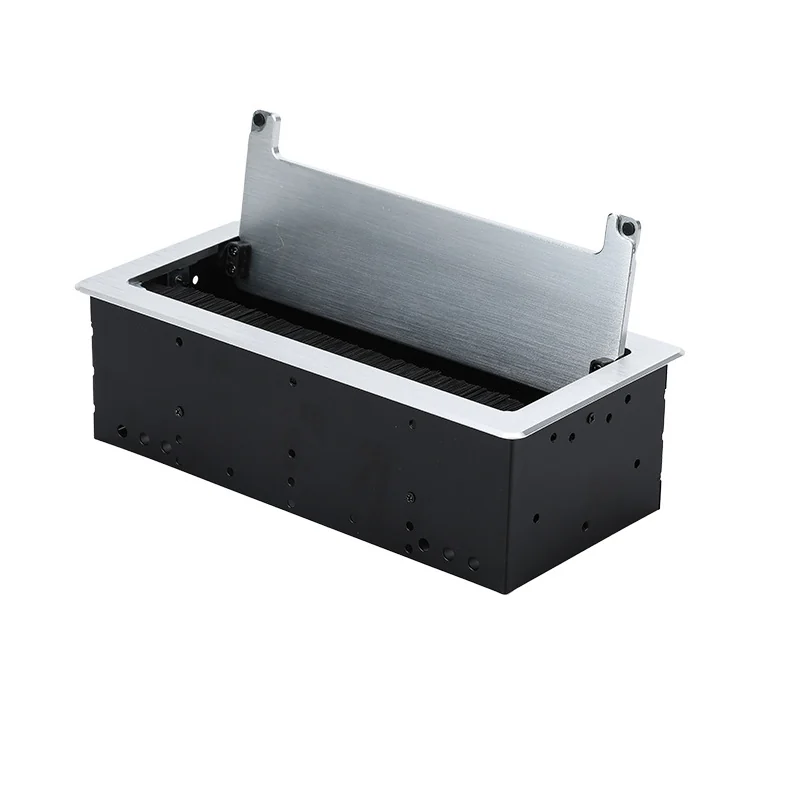
Copy this model shortlist table
| Field | Candidate A | Candidate B | Candidate C |
|---|---|---|---|
| Formal model | Enter model | Enter model | Enter model |
| Format reason | Why it fits the furniture task | Why it fits | Why it fits |
| Confirmed evidence | Current page and real images | Current page and real images | Current page and real images |
| Needs verification | Configuration, drawing and destination gaps | Open items | Open items |
| Sample proof target | What the paid sample must demonstrate | Proof target | Proof target |
| Decision owner | Furniture, electrical, sourcing or project role | Owner | Owner |
| Status | Shortlist / hold / reject | Status | Status |
Separate confirmed evidence from open configuration questions
The shortlist should contain three evidence states. Confirmed means the current product record or received sample supports the statement. Needs verification means the buyer has identified a required detail but has not yet received sufficient evidence. Written confirmation means the selected model, configuration, quantity and destination have been recorded in the supplier’s response, quotation or approved order document.
Do not move a field from “needs verification” to “confirmed” because a similar model shows it. Do not use a scene image as model proof. Do not use the public title of a model page as confirmation of every order option. Product evidence follows the exact model and configuration under review.
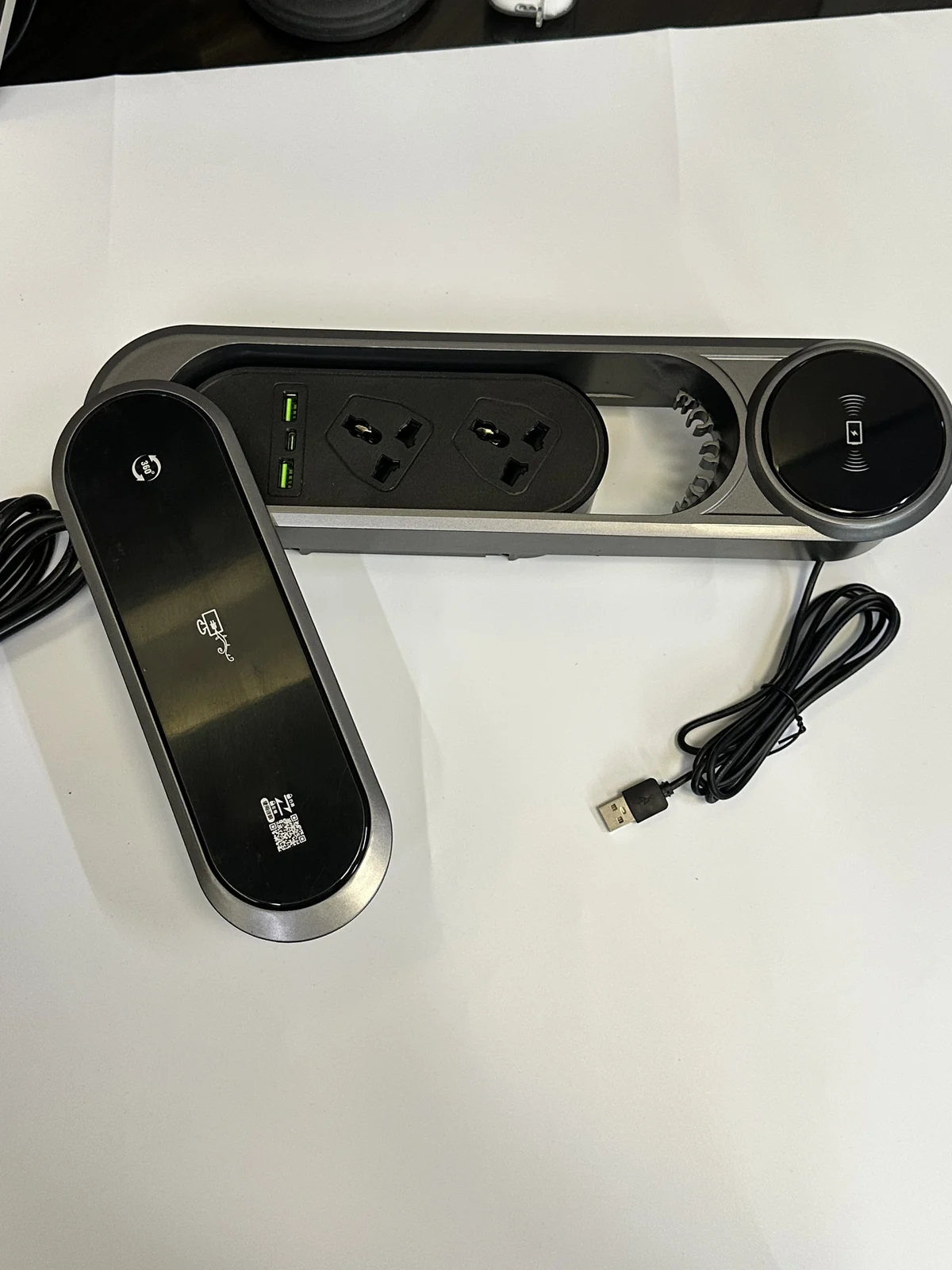
Define what the paid sample must prove
Sooye Studio’s current policy is that samples are paid and sample freight is paid by the buyer. That makes the proof target important. A paid sample should not merely confirm that the product exists. It should answer the project’s unresolved decision questions.
- Does the received item match the recorded model and visible configuration?
- Can it be installed on the representative furniture assembly?
- Do contact surfaces, opening, fixation and cable routing match the approved plan?
- Can installers reach the fasteners and service the product after installation?
- Are the plug, cable and visible interfaces the ones recorded for review?
- Are labels, documents and packaging evidence present where required?
- Which points remain open before the RFQ or bulk-order decision?
Keep commercial terms outside the product assumption column
The shortlist can state that paid samples are the current route and that sample freight is paid by the buyer. It should not invent a sample price, preparation time, MOQ or standard production lead time. Those fields depend on the selected model, requested configuration, quantity, destination and current written quotation.
OEM/ODM, private label, logo, packaging, colour, port, plug, cable, moulding and structural requests should be stated as RFQ inputs. Feasibility and terms require written confirmation by model and order. A shortlist helps Sooye Studio review those inputs; it does not pre-approve them.
Assign decision owners
Furniture team
- Opening or edge geometry
- Top material and thickness
- Underside interference
- Visible finish and placement
Sourcing and project team
- Formal model and supplier record
- Destination configuration
- Paid sample and freight approval
- Open documents and RFQ terms
Electrical or compliance review may require a separate qualified role. Public product images and this checklist do not replace destination-specific technical review.
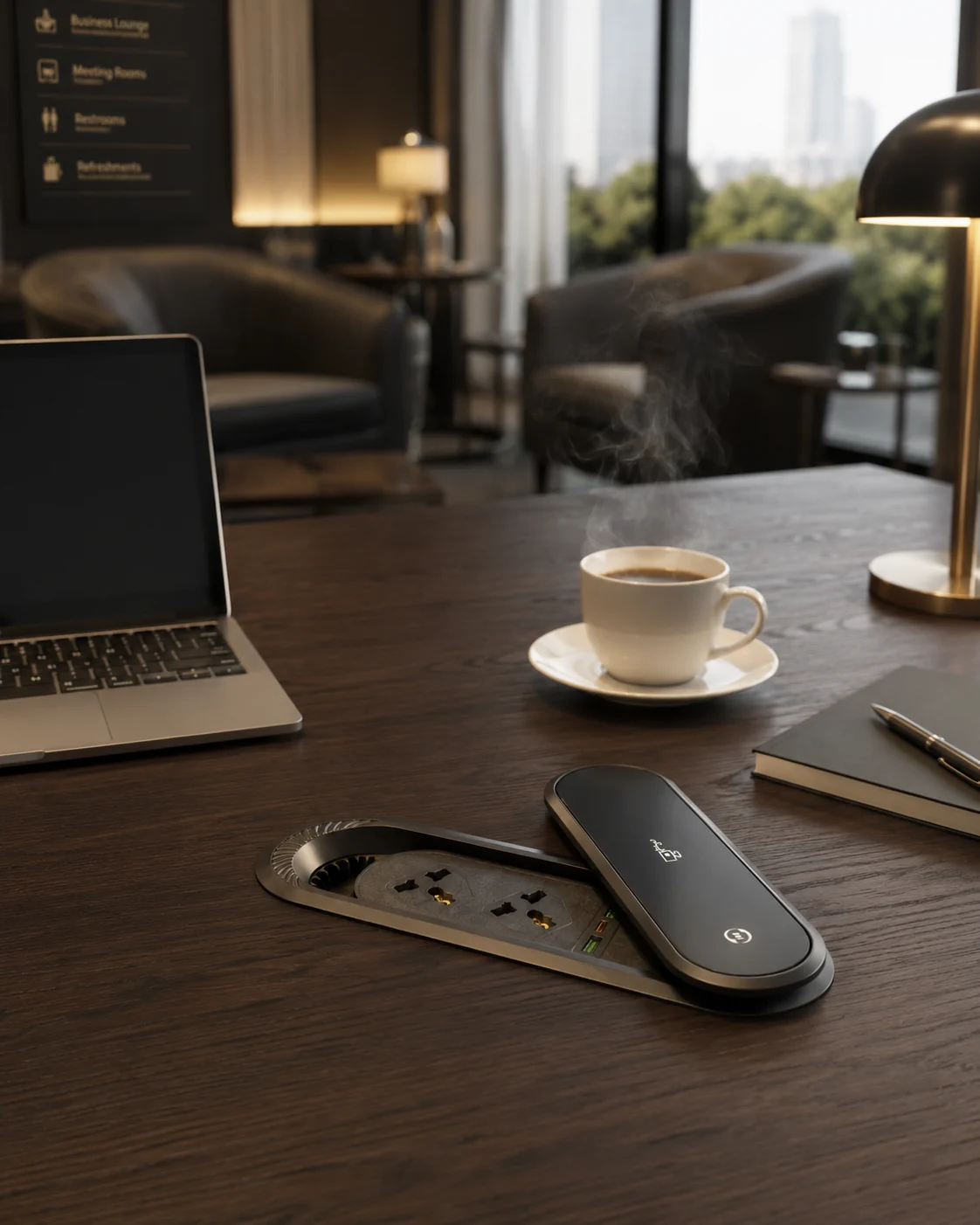
What to confirm before RFQ
- Project name, application and destination.
- Two or three formal model candidates, with links or product images.
- Furniture drawing revision and installation-family decision.
- Required socket, charging and data interfaces as buyer inputs.
- Plug, cable, finish and visible configuration questions.
- Required model-specific documents.
- Paid sample quantity, delivery address and freight responsibility.
- Sample acceptance tests and responsible reviewers.
- Estimated order quantity and any packaging, branding or customisation request.
Use the shortlist as a controlled handoff
Start at the Product Catalog, then compare formats through Office Power Modules Product Detail and the embedded desk power hub. Use the clamp-on versus recessed decision guide when furniture integration is unresolved. Check drawings with the port layout drawing checklist and destination questions with the plug standard guide.
Before approval, use the sample photography checklist, sample testing checklist and documentation checklist. Send the completed shortlist through the Inquiry and RFQ page.
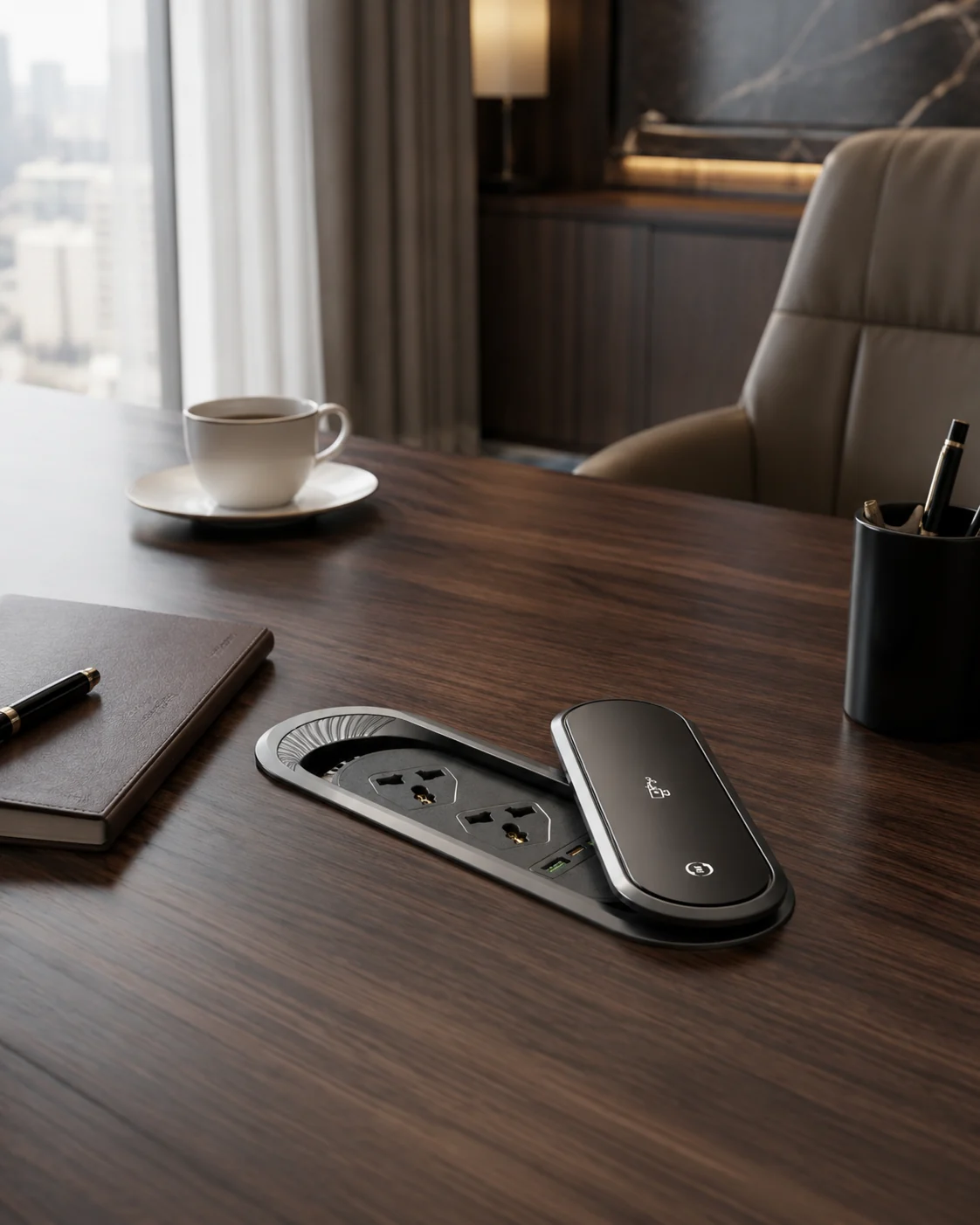
Send Sooye Studio the shortlist, destination, furniture drawing, paid-sample quantity and proof targets. We will identify which items are already supported by current evidence and which require model- and order-specific written confirmation.
Editorial basis: current 18-product catalogue, real product references, confirmed paid-sample terms and the Sooye Studio Discover → Verify → Sample → RFQ workflow.