Module format
Define whether the project needs recessed, clamp-on, flip-up, pop-up, under-desk or another reviewed format, then check furniture fit.
Buyer decision brief
A useful office power-module brief connects the furniture application, installation envelope, charging expectations and destination configuration to one exact model. This page focuses specifically on office power modules.
Define whether the project needs recessed, clamp-on, flip-up, pop-up, under-desk or another reviewed format, then check furniture fit.
List the required outlets, USB expectations, simultaneous-use scenario and cable needs without assuming that every model has the same configuration.
Compare current models, order a paid sample, record installation and use checks, then confirm the approved configuration in the RFQ.
Paid samples are available for current formal models and sample freight is paid by the buyer. MOQ varies by category and model. Lead time and exact commercial terms are confirmed in the written quotation.
Discover→Verify→Sample→RFQ
A product detail page for office power modules used in desks, meeting tables, conference rooms, hotel business centers, coworking spaces, and commercial fit-out projects.
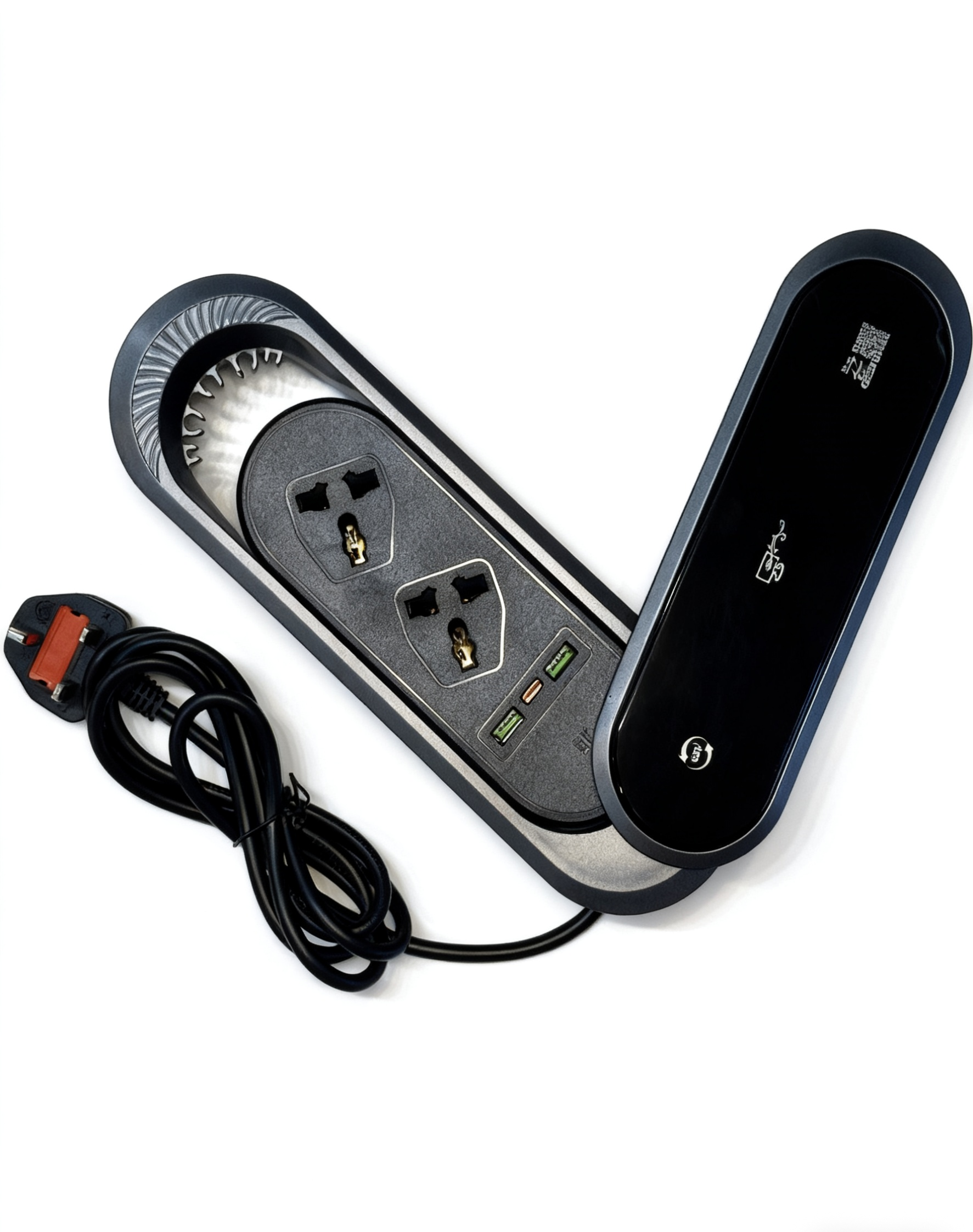
A product detail page for office power modules used in desks, meeting tables, conference rooms, hotel business centers, coworking spaces, and commercial fit-out projects.
Positioned as part of Sooye Studio’s office furniture accessories and workspace hardware supply line.
Designed for B2B buyers who need sample confirmation, bulk sourcing, and repeat-order stability.
Customization can include finish, packaging, dimensions, layout, branding, labels, or application-specific requirements.
For office furniture suppliers, wholesalers, distributors, fit-out buyers, importers, and private label brands.
Use this table as a sourcing checklist. Final details should be confirmed by RFQ with product photos, drawings, target market, quantity, packaging, and OEM requirements.
| Product type | Office power module / USB-C desk power module / conference room power module / embedded desk socket |
|---|---|
| Applications | Office desks, meeting tables, conference rooms, hotel business centers, coworking spaces, and commercial fit-outs |
| Common options | AC outlets, USB-A, USB-C, cable access, plug type, cable length, and panel finish |
| Buyer fit | Office furniture suppliers, desk wholesalers, fit-out contractors, hotel buyers, and workspace distributors |
| Supply model | Wholesale, samples, OEM, ODM, private label, repeat orders |
| RFQ inputs | Target country, plug type, voltage, port layout, cable length, cutout size, quantity, packaging |
Confirm dimensions, installation method, application, and compatibility with the furniture system.
Confirm material, surface finish, color, visible design, and market expectations.
Neutral packaging, branding and packaging requirements for feasibility review, barcode, instruction sheet, or project labeling can be discussed.
Samples, first order, repeat order forecast, and catalog consistency should be confirmed early.
Sooye Studio can help buyers compare product photos, drawings, target applications, quantity, packaging needs, and OEM/private label details before quotation.
An office power module is an integrated power access component used in desks, meeting tables, and workspace furniture to provide AC outlets, USB charging, or cable access.
Yes. USB-C charging can be included depending on the selected layout and project requirements.
Typical buyers include office furniture suppliers, desk wholesalers, workspace distributors, fit-out contractors, hotel buyers, and buyers evaluating OEM / ODM programs.
Send target country, plug standard, voltage, quantity, port layout, cable length, cutout size, finish, packaging, and delivery schedule.
Include product category, photo or drawing, quantity, target market, material or finish, packaging, sample needs, OEM/private label requirements, and expected delivery schedule.
Product hub enhancement · Updated 29 July 2026
Direct answer: Select an office power module in two passes. First choose the product format that can work with the furniture: round recessed, rectangular recessed, sliding or flip cover, rotating, pop-up, clamp-on or another current format. Then compare exact models by confirmed images, current page evidence, destination questions and sample proof targets. Do not mix visible product evidence with unconfirmed order options.
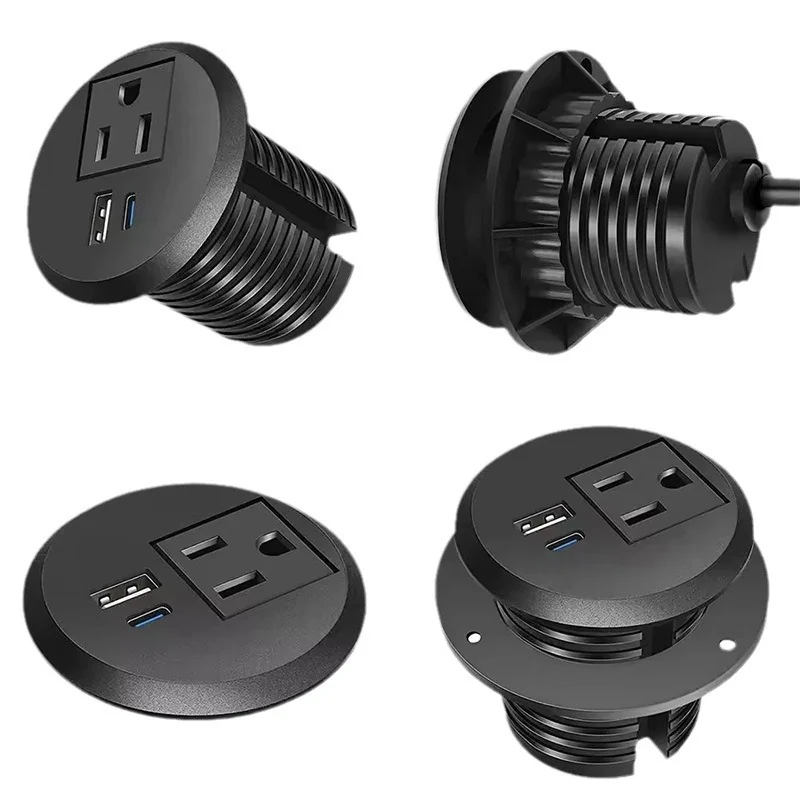
| Format family | Furniture question | Evidence to request | Buyer next step |
|---|---|---|---|
| Round recessed | Can the top accept the model-specific opening and underside body? | Current drawing, body views, fixing and cable exit | Representative cutout and fit test |
| Rectangular recessed | Are opening, corner treatment, flange and underside clearance controlled? | Revision-controlled drawing and installed views | Furniture drawing sign-off |
| Sliding or flip cover | Is there space to open, close, connect and service the module? | Open, closed, side and underside evidence | Movement and access check |
| Rotating or pop-up | Can the mechanism move without furniture or cable interference? | All operating positions and service route | Representative assembly test |
| Clamp-on | Is a compatible desk edge available without surface damage or obstruction? | Contact pads, clamp path, edge geometry and cable route | Contact-surface sample inspection |
Sooye Studio currently publishes DP-01 through DP-17 and CM-01. Use the Product Catalog to discover the full set, then open the exact model page. Model pages should remain distinct and should not be merged simply because their layouts look similar.
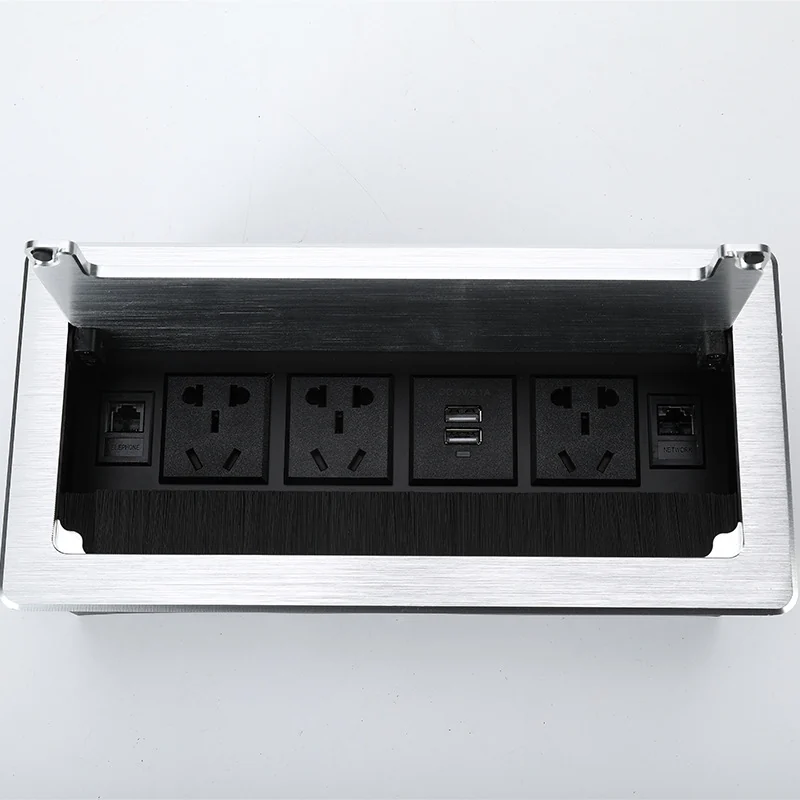
The product hub can narrow a format, but two approval tracks still have to close. The furniture track records the opening or edge, top construction, underside space, fixing, cable route and service access. The configuration track records the selected model, visible interfaces, destination, socket format, plug, cable and requested documents. Do not let one track silently approve the other.
| Approval track | Minimum buyer input | Evidence before commitment |
|---|---|---|
| Furniture interface | Drawing, material, thickness and intended position | Current model drawing plus representative fit record |
| Visible configuration | Required socket and charging interfaces | Approved layout, sample photograph or written configuration |
| Destination | Country or market and requested documents | Plug, cable, socket and document response tied to the model |
| Commercial | Quantity, packaging, sample address and schedule need | Dated quotation and order-specific written terms |
A useful shortlist states why a model remains and why another was removed. Exclusion can be based on an incompatible installation family, insufficient underside clearance, blocked service access, an unavailable destination configuration or missing evidence that cannot be closed in time. This is more reliable than ranking models by appearance alone.
The sample stage ends when the team has one written disposition and a traceable evidence set. The RFQ should inherit the sample reference, approved model/configuration, furniture condition and any permitted deviations. It should also list fields that remain commercial or order-specific. If a project proceeds before a field is closed, the record should name that risk explicitly rather than converting an assumption into a specification.
For programmes with several furniture types, repeat the fit row for each materially different condition. A sample approved on one desk does not automatically cover another top thickness, edge profile, underside frame or service route. This small distinction prevents a catalogue shortlist from becoming an uncontrolled project-wide approval.
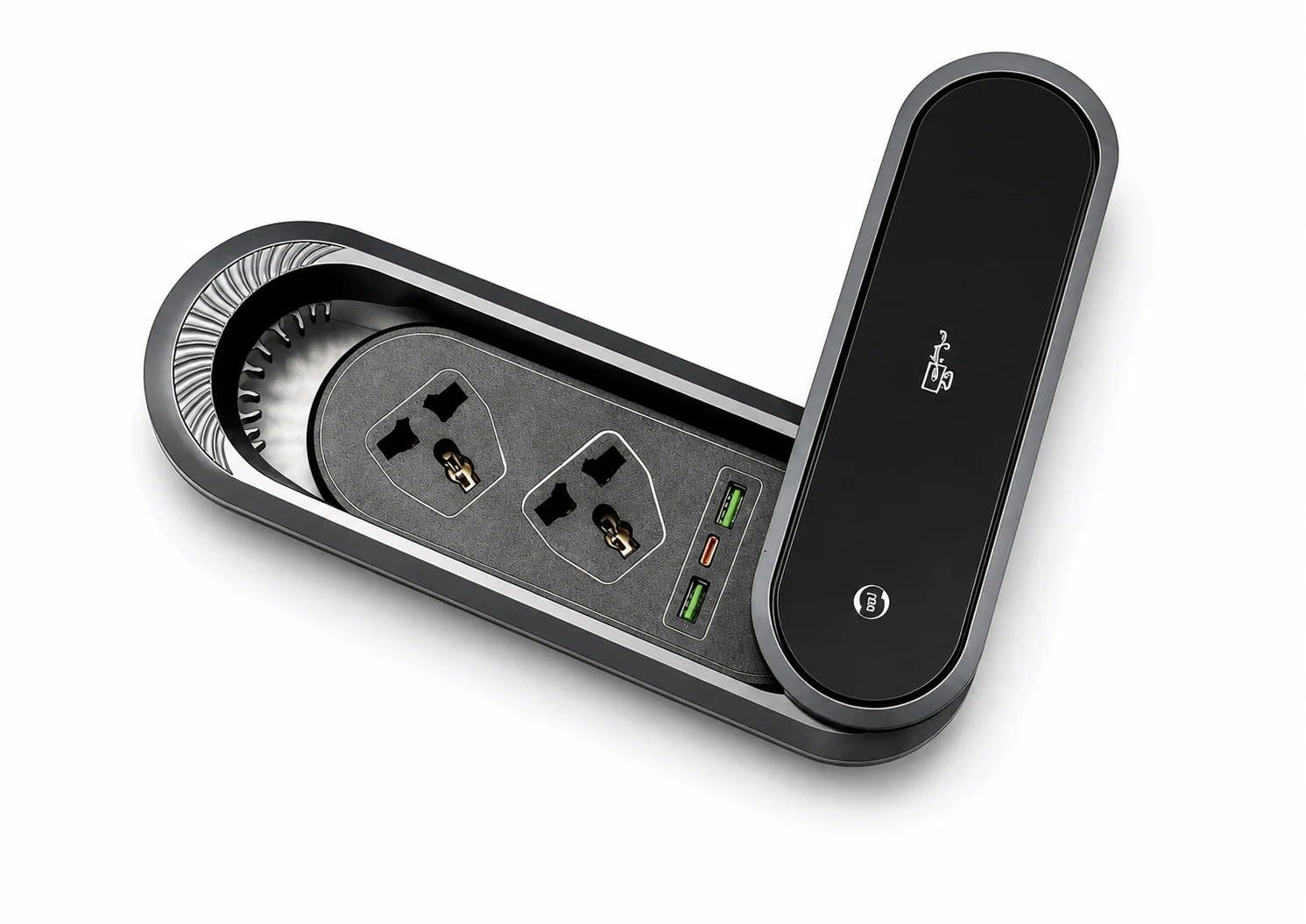
Sooye Studio confirms current public product evidence first, then reviews destination, configuration, sample, documents and order terms in writing. No uniform MOQ or lead time is published because those details depend on the selected model and order.
Direct answer: use this hub to choose a current furniture-interface family, then normalize supplier responses at the exact model/configuration level. The quotation comparison sheet owns response comparability; the cable versus power grommet guide owns the boundary between cable management and powered furniture interfaces.
What to confirm before RFQ: exact model, furniture interface, drawing revision, position, destination, requested layout, plug and cable inputs, document list, paid-sample result and every field that remains Needs verification. Product-family language should never replace written model and configuration confirmation.
Preserve the comparison and sample identifiers through the inquiry so every later clarification can be traced back to the same approved evidence.